|
|
|
|
HISTORY
PENNSYLVANIA STATE POLICE
|
|
|
Pennsylvania's
coal fields, iron mills, and timber forests played a vital role in the Industrial Revolution.
Pennsylvania changed in the late 1800's from a largely agricultural state into
a complex industrial center. |
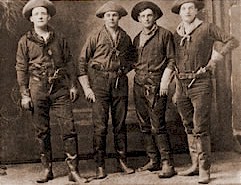
| First
Recruits |
|
|
|
|
|
By 1900 [the state] found itself torn by bitter
disputes between managers and the laborers they employed. Violence became common in the new
communities that sprang up around the coal fields, iron mills, textile factories and railroad
yards. By the turn of the century it was evident that the town constables, sheriffs and
similar local officials, who had been adequate to keep the peace in more stable times were
unable to cope with the new populations and the violent labor troubles of the times.
To provide themselves protection that the
Commonwealth did not provide, the coal and steel operators persuaded the State Legislature to
authorize the creation of what became the infamous Coal and Iron Police. For one dollar each,
the state sold to the mine and steel mill owners, commissions conferring police power upon
whomever the owners selected.
Through these commissions. armies of guards were
raised, ostensibly to protect private property. but actually used to enforce the will of the
owners. Often common gunmen, hoodlums, and adventurers were hired to fill these commissions
and they served their own interests by causing the violence and terror that gave them office.
The turning point came in 1902 with what became
known as The Great Anthracite Strike. It began May 15 and lasted until October 23. The
violence disrupted the peace of seven counties and caused a nationwide coal shortage, driving
up the price of anthracite coal. The strike did not end until President Theodore Roosevelt
intervened. During the strike's aftermath, it was finally recognized that peace and order
should be maintained by regularly appointed and responsible officers employed by the public.
This led to the formation of the Pennsylvania State Police.
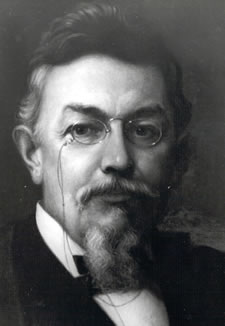
Governor Samuel
Whitaker Pennypacker
The Pennsylvania State Police was created as an executive department of
state government by legislation, Senate Bill 278, signed into law by Governor Samuel W.
Pennypacker on May 2, 1905. The department became the first uniformed police organization of
its kind in the United States and a model for other state police agencies throughout the
nation.
Opposition to the department's creation was strong
and persistent. Because of the
fear, mostly by organized labor, that the State Police would be
used as a private army. The original complement was limited by law to only 228 men
who were
to patrol Pennsylvania's entire 45,000 square miles.
The force was divided into four Troops:
• Troop A, Greensburg
• Troop B, Wilkes-Barre (later moved to Wyoming)
• Troop C, Reading
• Troop D, Punxsutawney
The State Police soon
proved its worth by controlling mob violence, patrolling farm sections, protecting wildlife
and tracking down criminals. From the outset, the department established a reputation for
fairness, thoroughness and honesty.
|
|
|
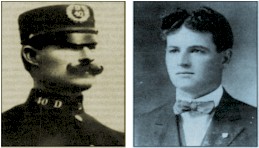 |
| On September 2, 1906, the first two State Policemen were killed in the line of duty in
Florence, Jefferson County. |
|
| Pvt. Francis Zehringer |
Pvt. John Henry |
|
|
|
|
|
|
In 1907, the State Police Superintendent dictated that
enlistment's were open only to single men an order that was to remain in effect for 56
years. Also, troop commanders were given authorization to establish and close substations.
In January 1908, the Superintendent established
weekly training programs in each troop, a technique that still exists today. On June 1, 1909,
Troop C was moved from Reading to Pottsville and also designated as a State Police training
school.
In February 1910, the State Police quelled a
disorder caused by 6,000 employees of the Philadelphia Rapid Transit Company. The Philadelphia
Ledger identified the source of a State Policeman's power
by stating...
" The State Police represent no class or condition, no
prejudice or interest, nothing but the sovereign majesty of the law. Hostility to them is
hostility to the people."
Troop "D" relocated from Punxsutawney to a location
near Butler on January 15, 1911. The Superintendent also established
two-year enlistment
periods. In 1913, the Superintendent established a "Mess Committee" at each Troop and
mess facilities were maintained at each Troop Headquarters.
By 1919, the demand
for additional State Police units brought about the first increase in complement, authorizing
a maximum force of 415 men. That same year saw the transfer of State Fire Marshal duties to
the State Police.
|
|
|
|
|
|
|
|
|
|
|
PSP- HEMC™
is a Non-Profit Organization Committed to Collecting,
Preserving and
Exhibiting Significant Historical Documents and
Artifacts of the Pennsylvania State Police. |
|
|
|
|
|